COLESTEROLO E ATEROSCLEROSI: COME SI FORMANO LE PLACCHE
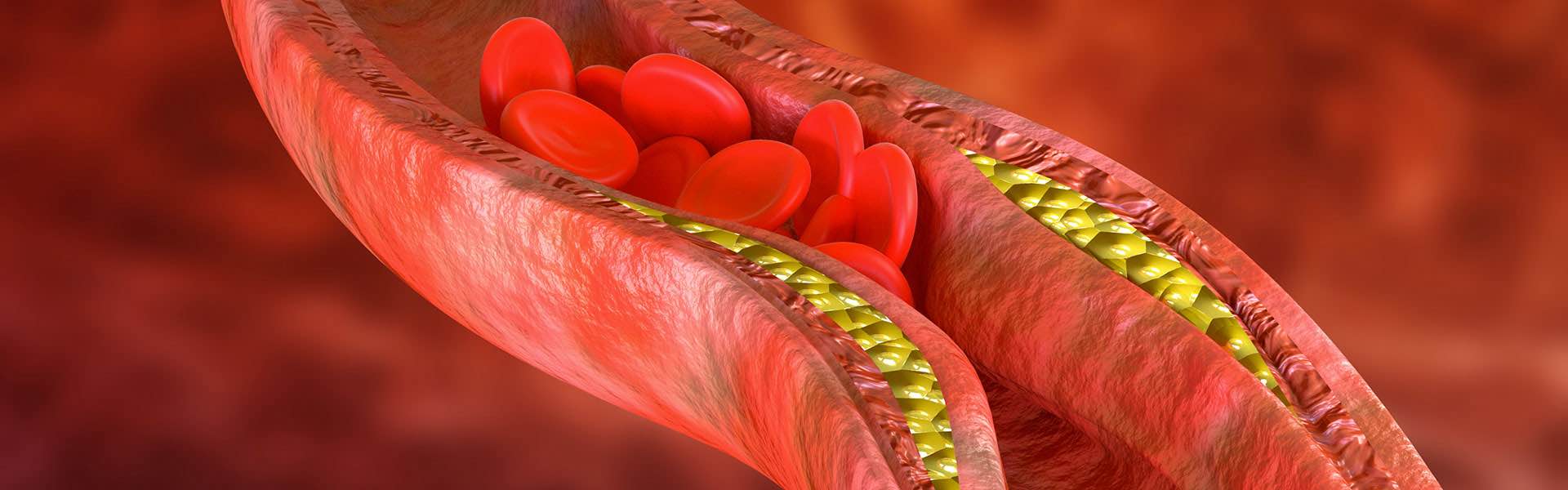
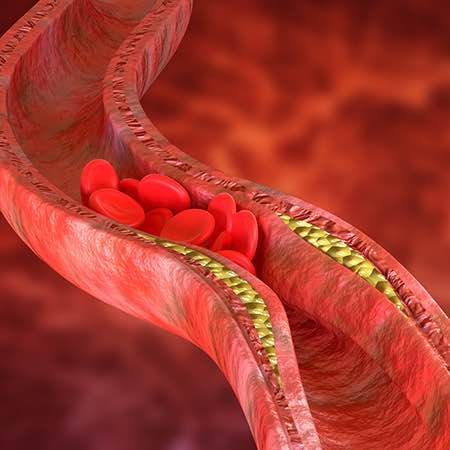
L’aterosclerosi una delle principali causa di decessi in tutto il mondo1. La formazione delle cosiddette placche aterosclerotiche è infatti alla base di infarti, ictus e diversi altri problemi cardiovascolari come l’angina pectoris e la morte cardiaca improvvisa2,3. Anche il colesterolo è coinvolto nel loro sviluppo; in particolare, a partecipare all’aterosclerosi è il cosiddetto colesterolo cattivo (quello presente nelle LDL, le lipoproteine a bassa densità – Low Density Lipoproteins) che, se presente in concentrazioni eccessive, tende ad accumularsi nella parete delle arterie2. I livelli ematici di colesterolo non sono però l’unico fattore in gioco.
PLACCHE ATEROSCLEROTICHE: DI COSA SONO FATTE?
I MECCANISMI DELL’ATEROSCLEROSI
ATTENZIONE AL COLESTEROLO
LE PRINCIPALI FONTI ALIMENTARI
1. Libby P, Ridker PM and Hansson GK. Progress and challenges in translating the biology of atherosclerosis. Nature 473, 317–325 (19 May 2011). 2. Galkina E and Ley K. Immune and Inflammatory Mechanisms of Atherosclerosis. Annu Rev Immunol. 2009; 27: 165–197. 3. Tabas I, García-Cardeña G, Owens GK. Recent insights into the cellular biology of atherosclerosis. J Cell Biol. 2015 Apr 13;209(1):13-22. 4. Libby P, Ridker PM, Hansson GK. Inflammation in atherosclerosis: from pathophysiology to practice. J Am Coll Cardiol 2009; 54:2129–38. 5. Lo J, Plutzky J. The biology of atherosclerosis: general paradigms and distinct pathogenic mechanisms among HIV-infected patients. J Infect Dis. 2012 Jun;205 Suppl 3:S368-74.